

Introduction
Have you ever felt like you are living your life on autopilot? I certainly have. It’s that nagging, quiet whisper in the back of your mind that suggests you are meant for more, yet you feel paralyzed by the fear of the unknown. You know you have gifts to share, but the roadmap to unlocking your potential seems blurred by daily routines and self-doubt.
I recently hit a wall in my own personal development journey. Despite reading countless books, I felt stagnant. That’s when I decided to sit down with Elena Rose, a certified Life Coach with over 15 years of experience in psychology and behavioral change. I wanted to move past the fluff and get to the root of what actually drives transformation.
In this “Life Record” post, I’m sharing the raw, unfiltered insights from our conversation. If you are ready to break through your glass ceiling, this guide is for you.
My Promise: By the end of this post, you won’t just feel inspired—you will have a concrete, 7-step blueprint to start unlocking your potential immediately.
Table of Contents
The Psychology of Being “Stuck”
Before we dove into the solutions, I asked Elena why so many of us struggle with unlocking your potential in the first place. Her answer was surprising.
“It’s rarely a lack of talent,” she explained as she poured her tea. “It is almost always a safety mechanism. Your brain is wired to keep you safe, not successful.”
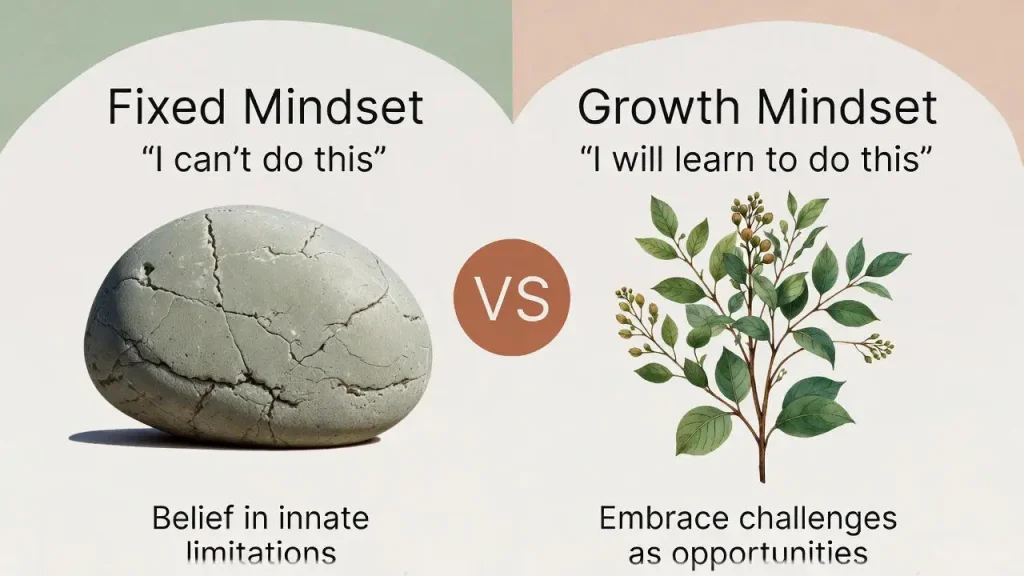
When we try to grow, our brain perceives the change as a threat. To overcome this, we have to signal to our nervous system that it is safe to expand. This requires a shift from a Fixed Mindset to a Growth Mindset.
Tip 1: Audit Your Inner Circle
The first thing Elena told me was to look around. “You can’t heal in the same environment that made you sick,” she noted.
Unlocking your potential is nearly impossible if you are surrounded by “energy vampires”—people who drain your enthusiasm or dismiss your dreams.
- Identify the Drains: Who leaves you feeling exhausted after a conversation?
- Identify the Radiators: Who leaves you feeling energized and capable?
Action Step: Write down the names of the 5 people you spend the most time with. Are they fueling your fire or dousing it?
Tip 2: Reframe Your Limiting Beliefs
We all have stories we tell ourselves. “I’m not good with money,” or “I’m too old to start over.” These are limiting beliefs, and they are the arch-enemies of unlocking your potential.
Elena shared a powerful exercise called “The Evidence Log.”
- Write down the limiting belief.
- Ask yourself: Is this 100% true?
- Write down three pieces of evidence that contradict this belief.
Real Life Example: I used to tell myself, “I’m not a disciplined writer.” But when I looked at my “Life Record,” I saw that I had journaled every day for three years. The evidence proved my belief wrong.
Pro Tip: Your brain believes what you tell it repeatedly. Start telling it a new story today.
Tip 3: The “1% Rule” for Consistency
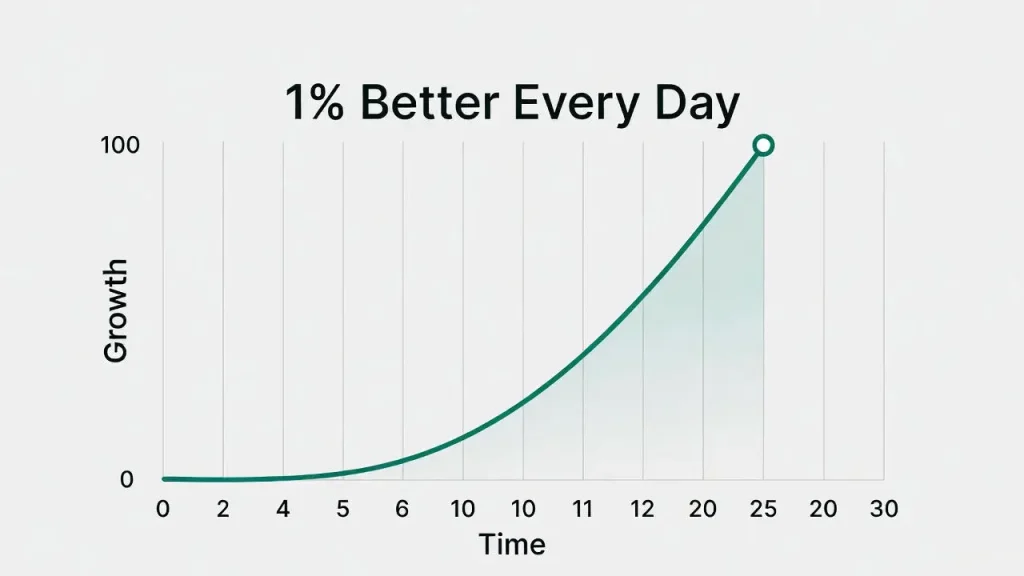
When we talk about unlocking your potential, we often imagine a massive, movie-montage transformation. But Elena swears by the “1% Rule.”
“Don’t try to change your whole life in a day,” she advised. “Just improve by 1% every day.”
Mathematically, if you get 1% better every day for a year, you’ll end up thirty-seven times better by the time you’re done.
How to apply this:
- Want to get fit? Do 5 minutes of stretching, not an hour of CrossFit.
- Want to read more? Read 2 pages, not a whole chapter.
Relevant SoulDairy post: Atomic Habits — The Small Changes That Quietly Shift Your Entire Life
Tip 4: Embrace Shadow Work
This was the deepest part of our interview. “Shadow Work” involves exploring the parts of yourself you usually hide—your jealousy, your anger, your fear.
“Your potential is often hidden behind the door you are most afraid to open,” Elena said.
If you are jealous of a colleague’s promotion, that jealousy is a map. It’s showing you what you actually want. Instead of suppressing it, use it as data to guide your path toward unlocking your potential.

Tip 5: Visualize the Process, Not Just the Outcome
We’ve all heard of vision boards. But are we doing them wrong?
According to research referenced by [Link to Authority Site like Psychology Today], visualizing the outcome (the fancy car, the award) can actually make your brain lazy. It thinks you’ve already achieved it.
The Fix: Visualize the process.
- See yourself waking up early.
- See yourself struggling with a task and pushing through.
- See yourself doing the hard work with a smile.
This prepares your neural pathways for the actual effort required in unlocking your potential.
Tip 6: Establish Non-Negotiable Boundaries
“You cannot pour from an empty cup,” Elena reminded me. High-potential individuals are often people-pleasers. They give away their time and energy until there is nothing left for their own growth.
Unlocking your potential requires you to protect your energy fiercely.
The “No” Checklist:
- Does this align with my goals?
- Do I have the energy for this?
- Am I saying “yes” out of guilt?
If the answer to the last question is yes, the answer to the request must be no.
Read Also : How to Have Non-Negotiables
Tip 7: Failure as Data, Not Defeat
The final tip Elena shared was about resilience.
“The only difference between a master and a beginner is that the master has failed more times than the beginner has even tried.”
When you are committed to unlocking your potential, you will fail. You will stumble. The key is to detach your self-worth from the failure. View it scientifically:
- Hypothesis: I will try this new marketing strategy.
- Experiment: It didn’t work.
- Conclusion: Adjust the strategy.
It does not mean you are a failure. It means the strategy needs adjustment.
Relevant SoulDairy post: How I Turned My Biggest Failure Into My Life’s Greatest Lesson
Interactive: The Potential Audit Checklist
Take a moment to reflect. Grab your journal or a piece of paper.
- [ ] Have I identified my top 3 limiting beliefs?
- [ ] Am I spending time with people who support my growth?
- [ ] Have I set a “1% goal” for tomorrow?
- [ ] Am I saying “no” to things that drain me?
If you checked fewer than 2 boxes, don’t worry. Start with Tip 3 and just focus on one small change tomorrow.
❓ Frequently Asked Questions (FAQ)
Q: How long does unlocking your potential take?
A: It is a lifelong journey, not a destination. However, with focused effort on mindset and habits, you can start seeing significant changes in your mood and productivity within 30 to 60 days.
Q: Can I unlock my potential without a life coach?
A: Absolutely. While a coach provides accountability, you can achieve great results through self-discipline, reading, journaling, and applying the tips listed above. Self-education is a powerful tool.
Q: What if I don’t know what my potential is?
A: Start by following your curiosity. What topics do you love reading about? What activities make you lose track of time? Your passion often leaves clues in your hobbies.
Q: Is it too late to unlock my potential at 40 (or 50+)?
A: Never. Neuroplasticity (the brain’s ability to change) exists throughout life. Many successful people, like Vera Wang and Colonel Sanders, found their true calling later in life.
Q: How do I stop self-sabotage?
A: Self-sabotage is usually fear in disguise. Use the “Evidence Log” mentioned in Tip 2 to challenge the fears causing the sabotage and practice self-compassion.
Key Takeaways
- Environment Matters: Surround yourself with people who lift you up.
- Small Steps Win: Use the 1% rule to build sustainable habits.
- Reframe Beliefs: Challenge the negative stories you tell yourself.
- Love the Process: Visualize the work, not just the reward.
- Protect Your Energy: Boundaries are essential for unlocking your potential.

Conclusion
Sitting with Elena, I realized that unlocking your potential isn’t about becoming a different person. It’s about becoming more of who you really are. It’s about stripping away the fear, the doubt, and the conditioning that has piled up over the years.
I left that coffee shop feeling lighter. I hope reading this makes you feel the same. The world needs the gifts you are hiding. It’s time to unlock them.
What is the one limiting belief you are ready to let go of today? Share it in the comments below—let’s keep each other accountable!
Realavent Webite : Psycology Today, Healthcare