
Introduction
It started with a simple request. A colleague asked me to take on “just one small project” over the weekend. My stomach tightened, and my brain screamed, “You are already exhausted!” But my mouth? My mouth betrayed me.
“Sure, I’d love to help,” I said, forcing a smile.
Does this sound familiar? You aren’t alone. For years, I viewed “No” as a dirty word—a sign of selfishness or incompetence. I thought saying yes made me valuable. Instead, it made me burnt out, resentful, and anxious.
The art of saying no isn’t about being rude or uncaring; it is about self-preservation. It is the realization that every time you say “yes” to something you don’t want to do, you are actually saying “no” to your own mental peace.
If you are tired of living your life on everyone else’s terms, this “Life Record” entry is for you. Today, we are going to walk through how to set boundaries, ditch the guilt, and finally reclaim your time.
Table of Contents
Why Is Saying No So Hard? (The Psychology)
Before we can change our behavior, we have to understand the root cause. Why does a two-letter word feel so heavy?
In my experience coaching clients and reflecting on my own life records, the inability to say no usually stems from deep-rooted fears.
- The Fear of Rejection: We worry that if we say no, people will stop liking us.
- The Fear of Conflict: We want to keep the peace at all costs.
- The Hero Complex: We derive our self-worth from being the person who “saves the day.”
Pro Tip: “No” is a complete sentence. You do not need to justify your boundaries to make them valid.
According to research in social psychology, humans have an innate need to belong. This “herd mentality” kept our ancestors alive. But in the modern world, this instinct causes us to overcommit to bake sales, extra shifts, and social gatherings that drain our batteries.
The High Cost of Being a “Yes” Person
What happens when you ignore the art of saying no? You might think you are being helpful, but the long-term effects are dangerous.
I remember hitting my breaking point three years ago. I had said yes to a freelance gig, a family reunion committee, and a friend’s moving day—all in the same week. The result? I got sick. Physically, mentally, and emotionally.
Here is the price you pay for chronic people-pleasing:
- Resentment: You start to secretly dislike the people you are helping.
- Burnout: Your energy reserves hit zero.
- Low Quality Output: You can’t give 100% when you are spread thin.
- Loss of Self: You forget what you actually enjoy doing.
[Link to relevant SoulDairy post: 10 Proven Ways to Stop Overthinking and Anxiety Today]
7 Steps to Master the Art of Saying No
Changing a lifetime habit of people-pleasing takes time, but it is entirely possible. Here is the framework I used to turn my life around.
1. Pause Before You Answer
The biggest mistake we make is answering immediately. When someone asks you for a favor, buy yourself time.
- Try this: “Let me check my schedule and get back to you.” This breaks the knee-jerk “yes” reaction.
2. separate the Request from the Relationship
Saying no to the request is not the same as rejecting the person. Remind yourself that you care about your friend, but you cannot fulfill this specific task.
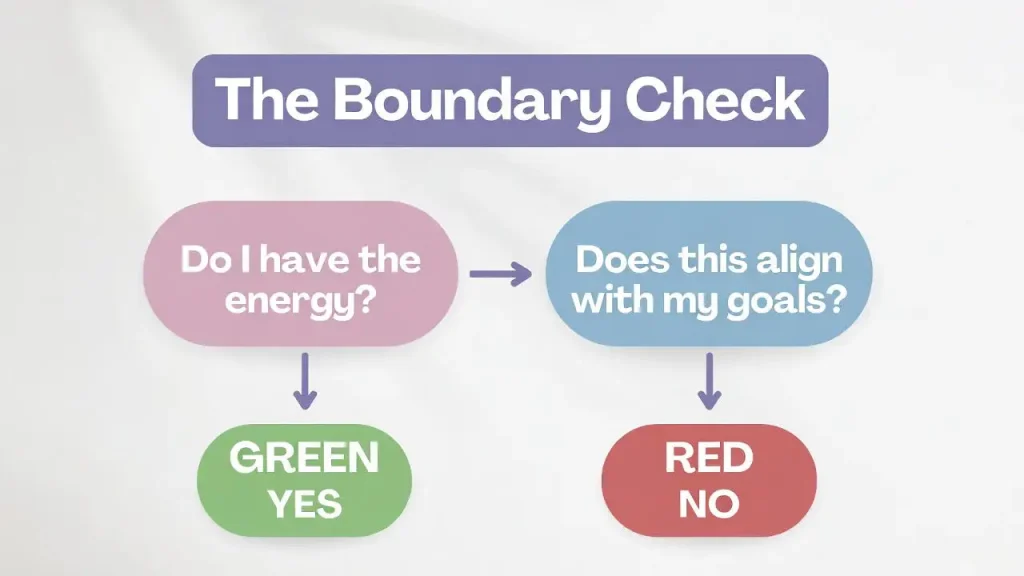
3. Know Your Priorities
If you don’t prioritize your life, someone else will.
- Make a list of your top 3 goals for the month.
- If a request doesn’t align with these goals or your values, it’s a candidate for a “no.”
4. Be Clear and Concise
Don’t over-explain. When you offer a five-minute excuse, you give the other person an opening to negotiate. Be firm but kind.
5. Offer an Alternative (The “Soft No”)
If you want to help but can’t do exactly what is asked, offer a compromise.
- Example: “I can’t bake 50 cupcakes for the school fair, but I can pick up napkins and plates.”
6. Practice in Low-Stakes Situations
Don’t start by saying no to your boss. Start small. Say no to the cashier offering a store credit card. Say no to a waiter offering dessert. Build your “No Muscle.”
7. Guard Your “Me Time” Fiercely
Treat your downtime like a doctor’s appointment. It is non-negotiable.
The Benefits of Solitude : psychologytoday

Exact Scripts: How to Say No Without Guilt
Struggling to find the words? I keep these scripts in the Notes app on my phone. Feel free to steal them!
For Social Invitations
- “Thank you so much for thinking of me! I’ve been feeling a bit run down lately and need to rest this weekend, so I won’t be able to make it.”
- “I’m not taking on any new social plans right now, but I’d love to catch up next month.”
For Work Requests
- “I would love to help with this, but my plate is currently full with [Project X]. If I take this on, the quality of my other work will suffer.”
- “I can’t take the lead on this, but I can spend 15 minutes brainstorming ideas with you.”
For Family Obligations
- “I love you guys, but I can’t host dinner this Sunday. I’m happy to come over if someone else is hosting, though!”
Key Takeaway: The delivery matters more than the word. If you say “no” with confidence and kindness, people will respect it. If you waiver, they will push.
Overcoming the “Guilt Hangover”
This is the hardest part. You’ve mastered the art of saying no, you’ve used the scripts… and now you feel terrible.
We call this the “Guilt Hangover.”
When I first started setting boundaries, I would lay awake at night wondering if my friend was mad at me. But here is the truth I learned: Disappointment is not the same as toxicity.
It is okay for people to be disappointed that you said no. It is not their job to be happy about your boundary, but it is your job to set it.
Reflection Question:
- Ask yourself: Am I feeling guilty because I did something wrong, or because I am breaking a pattern of pleasing others?
Usually, it is the latter. Sit with the discomfort. It will pass
Read More ? The Day My Heart Felt Heavy: My Life Story of Emotional Overwhelm
FAQ: Boundary Basics
Q: What if they get angry when I say no?
A: If someone gets angry because you set a boundary, that is a red flag. It shows they felt entitled to your time. Their reaction is a reflection of them, not you. Stand firm.
Q: Can I say no to my boss?
A: Yes, but frame it around capacity and output. Instead of a flat “no,” explain that taking on the new task requires de-prioritizing something else. Ask them to help you prioritize.
Q: Is it selfish to put myself first?
A: Absolutely not. You cannot pour from an empty cup. Self-care is a necessity, not a luxury. By protecting your energy, you show up better for the people you love.
Q: How do I stop over-explaining?
A: Practice the “sandwich method” internally, but outwardly keep it short. Thank them, decline, and wish them well. Stop talking after you state your refusal. Silence is powerful.
Q: What if I already said yes but want to change my mind?
A: It is better to back out now than to flake at the last minute or do a bad job. Be honest: “I realized I overcommitted and won’t be able to give this the attention it deserves.”
Conclusion
Mastering the art of saying no is a journey, not a destination. There will be days when you slip up and say yes out of habit. That is okay. Be gentle with yourself.
Remember, every time you set a boundary, you are teaching people how to treat you. You are telling the world that your time, your energy, and your mental peace are valuable.
Start small today. Decline one thing that drains you. See how it feels to reclaim that space for yourself. You might just find that “No” is the most positive word in your vocabulary.
I’d love to hear from you: What is the hardest situation for you to say “no” to? Work, family, or friends? Let me know in the comments below—let’s support each other!
I don’t think the title of your article matches the content lol. Just kidding, mainly because I had some doubts after reading the article.