
Introduction
Have you ever felt a sudden wave of anxiety when reading about how fast Artificial Intelligence is advancing?
I have. Just last week, I was looking at a new software tool that could do in seconds what used to take me hours. It’s a sinking feeling—wondering if your hard-earned technical skills will still matter in a year or two. We are all asking the same question: Where do I fit in this new world?
Here is the truth: The landscape is shifting. But while machines are mastering algorithms, they cannot master the human soul. The soft skills in demand 2026 will not be about coding faster or calculating better; they will be about connecting deeper, thinking clearer, and adapting smoother.
In this “Life Record” post, I’m going to walk you through the top soft skills in demand 2026 that will define your success. Understanding which soft skills in demand 2026 are critical will give you a clear roadmap to sharpen the one tool technology can never replicate: You.
💡 Key Takeaways: In this guide, we explore the top soft skills in demand 2026, including why digital empathy, adaptability, and critical thinking are becoming the most valuable assets for your career growth.
Table of Contents
Why Soft Skills Matter More Than Ever
Before we dive into the list, let’s get real for a second. Why are we talking about “soft” skills when “hard” tech skills seem to run the world?
In my ten years writing about psychology and personal development here at SoulDairy, I’ve noticed a pattern. The people who burn out aren’t usually the ones who lack technical knowledge. They are the ones who struggle to navigate change, manage their emotions, or communicate their value.
As we approach 2026, automation will handle the routine. Soft skills are your competitive edge. They are the portable assets you take with you from job to job, industry to industry.The shift towards automation is exactly why these specific soft skills in demand 2026 are becoming the new currency of the workplace.
SoulDairy Insight: Think of hard skills as your smartphone’s hardware. It’s impressive, but useless without the software (soft skills) to run the applications.
Skill #1: Radical Adaptability (The Art of Unlearning)
When I started my career, “adaptability” just meant being okay with a desk change. Today, it means something much more profound. It means Cognitive Flexibility.
Radical adaptability is the ability to pivot your thinking when new information is presented. It is about letting go of “how we’ve always done it.”
Why It’s Crucial for 2026
To stay competitive, mastering adaptability is vital as it tops the list of soft skills in demand 2026.The pace of change is accelerating. Strategies that work today might be obsolete by next Tuesday. Employers in 2026 won’t just look for problem solvers; they will look for people who can redefine the problem entirely.
Real-Life Application
I remember working on a massive project last year that got scrapped halfway through because the market shifted.
- Old reaction: Panic and frustration.
- Adaptable reaction: “Okay, the goal has changed. What assets from the old project can we recycle for the new one?”
How to Build It:
- Practice “Yes, And…”: Borrowed from improv comedy, accept a new situation and immediately build on it rather than blocking it.
- Diversify Your Routine: Intentionally change small habits (your commute, your coffee order) to train your brain to handle minor disruptions.
Read More : 10 Proven Ways to Stop Overthinking and Anxiety Today
Skill #2: Digital Empathy
We often think of empathy as sitting in a room, holding someone’s hand. But how do you show empathy through a Slack message or a Zoom screen?
Digital Empathy is one of the top soft skills in demand 2026. It is the ability to read between the lines of text-based communication and foster genuine human connection across digital divides.
The “Screen Barrier”
Have you ever received an email that sounded angry, only to realize later the sender was just in a rush? That is a lack of digital empathy—on both sides. As remote and hybrid work becomes the permanent standard, our ability to humanize the screen is vital.

Pro Tips for Digital Empathy:
- assume Positive Intent: Always assume the person on the other end is doing their best, even if their tone seems curt.
- Use Video Wisely: Don’t hide behind avatars. turning your camera on (even on bad hair days) builds trust.
- Contextualize Your Asks: Don’t just demand a file. Say, “I know you’re swamped with the Q1 report, but when you have a moment…”
Mastering this connection is what makes digital empathy one of the most unique soft skills in demand 2026.
Key Takeaway: In a high-tech world, high-touch behavior stands out. Be the person who makes others feel seen through the screen.
Skill #3: Critical Thinking & Sense-Making
We are drowning in information but starving for wisdom.
By 2026, the challenge won’t be finding information; it will be filtering it. With AI generating content at lightning speed, the ability to discern truth from hallucination, and signal from noise, is a superpower. This is Sense-Making.
Moving Beyond Data
Machines are great at processing data. Humans are needed to interpret why that data matters.
I once worked with a brilliant data analyst who could pull any number I asked for. But he struggled to tell me the story behind the numbers. He lacked sense-making. The leaders of 2026 will be the ones who can look at a graph and say, “This drop isn’t just a sales dip; it’s a shift in consumer sentiment regarding sustainability.”That’s why sense-making is becoming a standout among the soft skills in demand 2026.
How to Sharpen Your Critical Thinking:
- Question the Source: profound skepticism is healthy. Who wrote this? Why?
- Play Devil’s Advocate: When you form an opinion, force yourself to argue the opposite side. It exposes gaps in your logic.
- Look for Patterns: Connect dots between seemingly unrelated fields (e.g., how biology concepts apply to business growth).
Read Psychology Today: Cognitive Biases and How They Lead to Bad Decisions
Skill #4: Interpersonal Influence
You might hate the word “sales.” I used to. I thought it felt manipulative.
But Interpersonal Influence isn’t about tricking people into buying things they don’t need. It is the ability to inspire others, negotiate win-win outcomes, and lead without a title.
Why It’s Indispensable
In 2026, hierarchies will continue to flatten. You won’t always have a boss telling people to listen to you. You will have to convince them to listen to you.
The “Life Record” Approach to Influence
I learned this the hard way during a team conflict. I tried to use logic to win an argument. It failed. I only succeeded when I switched to influence: I listened to their concerns, validated them, and then showed how my solution solved their problem, not just mine.As hierarchies flatten, influence is rapidly becoming one of the essential soft skills in demand 2026 for leaders.
Core Components of Influence:
- Active Listening: You cannot influence someone you do not understand.
- Storytelling: Facts tell, but stories sell. Wrap your ideas in a narrative.
- Social Awareness: Reading the room to know when to push and when to pause.
Skill #5: Active Learning & Curiosity
The half-life of a learned skill is now only about 5 years. This means what you learned in college is likely already outdated.
The only way to survive is Active Learning. This is a mindset, not just a habit. It is the hunger to seek out new knowledge proactively rather than waiting for your boss to sign you up for a workshop.
The Growth Mindset and Soft Skills in Demand 2026
Employers in 2026 will value potential over proficiency. They would rather hire someone who doesn’t know the software but is dying to learn it, than an expert who refuses to update their methods.Employers analyzing the soft skills in demand 2026 prioritize candidates who demonstrate this hunger for learning.
How to Cultivate Curiosity:
- The 5-Hour Rule: Many successful leaders dedicate one hour a day (5 hours a week) to deliberate learning.
- Curate Your Feed: unfollow accounts that make you feel bad; follow accounts that make you think.
- Micro-Learning: You don’t need a degree. Watch a 10-minute YouTube tutorial or read a blog post (like this one!) daily.
Relevant SoulDairy post: 10 Proven Ways to Build a Reading Habit That Lasts
Read also : Harvard Business Review on Lifelong Learning
Your Reflection Checklist
Let’s pause. Reading is passive; reflection is active. Where do you stand right now with these soft skills in demand 2026?
Rate yourself from 1 (Novice) to 5 (Master) on the following:
- Adaptability: Do I panic when plans change, or do I pivot? [___]
- Digital Empathy: Do my emails sound robotic, or human? [___]
- Critical Thinking: Do I accept the first answer, or dig deeper? [___]
- Influence: Do I command, or do I connect? [___]
- Active Learning: When was the last time I learned something new for fun? [___]
Note: If you scored below a 15 total, pick ONE skill to focus on this month. Don’t try to fix everything at once.
Frequently Asked Questions
Here are some common questions I get from the SoulDairy community about future-proofing their careers.
Can soft skills really be learned, or are you born with them?
While some people have a natural disposition toward empathy or adaptability, these are absolutely learnable skills. Like a muscle, they require consistent exercise and conscious practice to grow stronger.
Out of all the soft skills in demand 2026, which one should I prioritize first?
I recommend starting with Active Learning. If you master the ability to learn efficiently, you can teach yourself all the other skills on this list. It is the “meta-skill” of success.
Will AI eventually replace soft skills too?
While AI evolves, the human touch remains the core of the soft skills in demand 2026.
How do I show soft skills on a resume?
Don’t just list “Good communicator.” Use bullet points to describe how you used that skill. Example: “Facilitated cross-department conflict resolution that saved a key client account.”
Are soft skills important for technical jobs?
Yes, perhaps even more so. Technical experts often have to explain complex concepts to non-technical stakeholders. The ability to translate and communicate data (Data Storytelling) is highly prized.
Conclusion
The year 2026 isn’t far away. It is just around the corner.
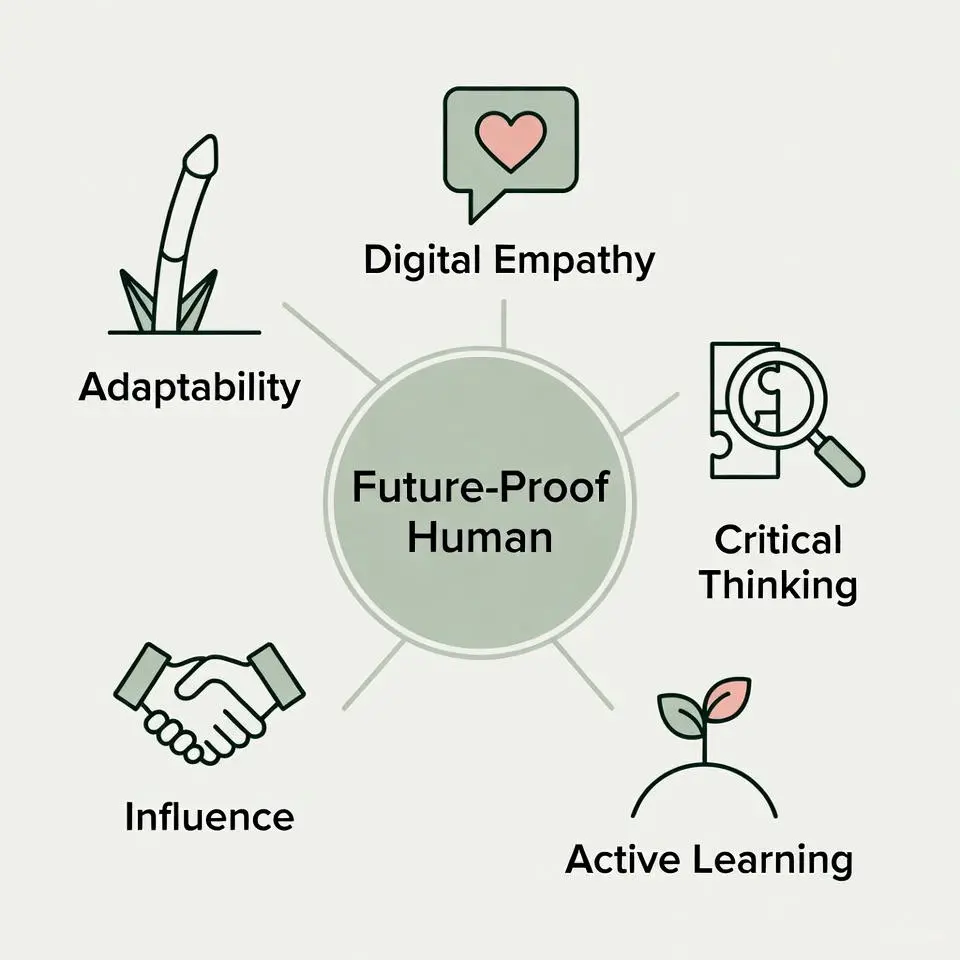
While the rise of AI and automation can feel intimidating, it is also an invitation. It is an invitation to become more human. The soft skills in demand 2026—adaptability, empathy, critical thinking, influence, and curiosity—are things that no machine can truly replicate.
You don’t need to be a tech wizard to thrive in the future. You just need to be willing to grow, to listen, and to connect.By focusing on these soft skills in demand 2026, you are building a career that is resilient, future-proof, and deeply human.
What is your experience with these skills? Which one do you find most difficult to master? Let me know in the comments below—I’d love to hear your story.