
Does December feel like a blur to you? One moment you are setting resolutions in January, and the next, you are shopping for holiday gifts, wondering where the time went. I know exactly how that feels. For years, I stumbled into the New Year exhausted, carrying the baggage of the past because I never took the time to pause and process.
Conducting a 2025 year in review isn’t just about looking at your calendar; it is an act of deep self-compassion. It is the bridge between who you were and who you are becoming.
Without reflection, we risk living the same year twice. But by asking the right questions, we can extract wisdom from our wounds and confidence from our wins. In this “Life Record” guide, I’m sharing the exact framework I use to close the chapter on 2025 with clarity and peace.
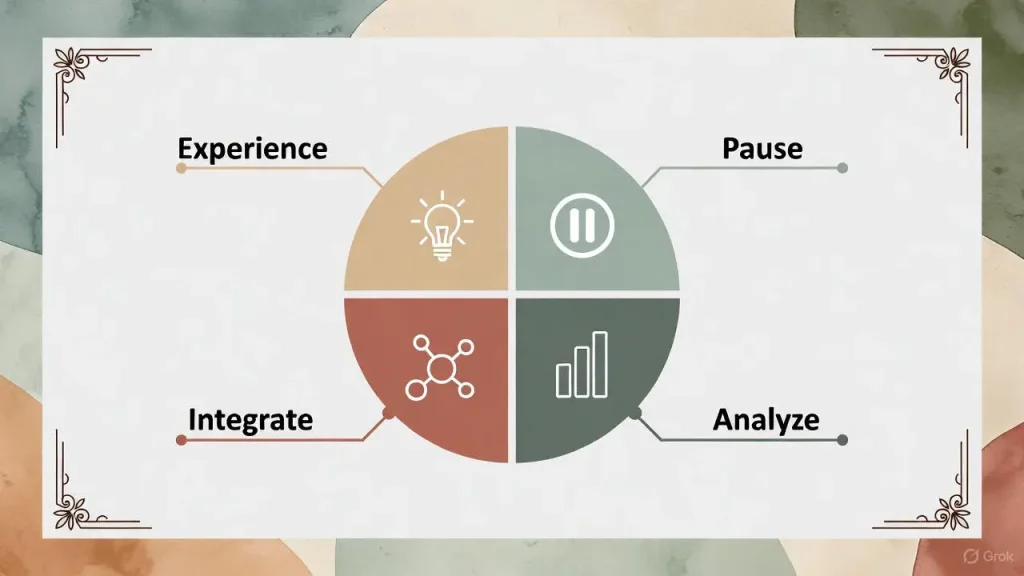
SoulDairy Truth: Growth doesn’t happen just by experiencing things; it happens when we reflect on those experience.
Are you ready to dig deep? Grab your favorite journal and a cup of tea. Let’s unravel the last 365 days together.
Table of Contents
Why a “Life Record” Review Changes Everything
It is tempting to skip the review and jump straight to setting goals for 2026. However, psychology tells us that the brain craves closure. This is often referred to as the Zeigarnik Effect—the tendency to remember uncompleted tasks better than completed ones. If you don’t mentally “close” the loops of 2025, they will drain your mental energy well into the new year.
A 2025 year in review does three critical things for your mental health:
- Validates Your Effort: We often forget what we achieved by March. This review proves you made progress.
- Identifies Patterns: Are you facing the same relationship issues? The same burnout? Reflection makes these patterns visible.
- Builds Self-Trust: When you acknowledge what you survived, you prove to yourself that you are resilient.
Authority Site: Read more about the benefits of reflection on Psychology Today
Setting the Stage for Honest Reflection
Before we dive into the questions, we need to curate the environment. You cannot perform a deep 2025 year in review while multi-tasking or watching Netflix. This is sacred time for your soul.
The SoulDairy Setup:
- Disconnect: Put your phone on “Do Not Disturb.”
- Ambiance: Light a candle or dim the lights.
- Tools: Use a physical pen and paper. Research shows that handwriting engages the brain differently than typing, allowing for deeper emotional processing.
- Time: Block out at least 60 minutes.
Pro Tip: Don’t judge your answers. In this session, you are the observer, not the critic. If you cry, let it flow. If you laugh, enjoy it. This is your life record.
Part 1: Celebrating the Wins (The Highlights)
We are wired with a “negativity bias,” meaning we remember insults and failures more vividly than compliments and successes. We are going to flip that switch right now.
1. What was your single proudest moment of 2025?
Don’t just think about career promotions. Did you set a boundary? Did you forgive someone? Did you get out of bed on a day you wanted to give up?
2. What is the best financial decision you made this year?
Maybe you started an emergency fund, or maybe you finally bought that coffee machine that brings you joy every morning.
3. Which new habit did you stick with the longest?
Even if you only did it for three months, that is a win. What did it teach you about your discipline?
4. Who did you help this year?
Service is a huge part of personal development. Reflecting on your kindness reminds you of your value to others.
5. What was a “happy accident” or unexpected joy?
Sometimes the best parts of our 2025 year in review are the things we never planned for.
Part 2: Navigating the Challenges (The Lessons)
Now, we move into the shadows. This isn’t about wallowing; it’s about mining for gold. Every struggle in 2025 carried a lesson.
6. What was the hardest thing you went through, and how did you handle it?
Look at your resilience. You are still here. How did you cope? Was it healthy?
7. What is one mistake you made that you are ready to forgive yourself for?
Guilt is heavy baggage. Leave it in 2025. Write it down, read it, and then imagine physically letting it go.
8. Where did you self-sabotage?
Be honest. Did you procrastinate? Did you push people away? Identifying the “how” is the first step to stopping it.
9. What drained your energy the most this year?
Was it a specific person? A clutter-filled home? The news?
10. What belief about yourself did you prove wrong this year?
Did you think you weren’t creative, but then you started painting? Did you think you were weak, but you handled a crisis?
Read More: Sunday Reset Routine: How to Plan a Successful Week
Part 3: Relationships & Connections
Our lives are defined by the quality of our relationships. Your 2025 year in review must include an audit of your social circle.
11. Who were the “energy vampires” in your life this year?
You don’t have to cut them off immediately, but you do need to recognize who leaves you feeling exhausted.
12. Who supported you most unconditionally?
Have you thanked them? A text message right now saying, “I appreciate you,” goes a long way.
13. What relationship surprised you the most?
Maybe an acquaintance became a best friend, or a close friend drifted away.
14. How were you a better partner/friend/child/parent this year?
Self-reflection isn’t just about what you received; it’s about what you gave.
15. What boundaries do you need to set in 2026 based on your 2025 experiences?
If you felt taken advantage of this year, that is a sign that a boundary was missing.
Part 4: The Inner Self & Habits
This final section is about your internal operating system.
16. How did you speak to yourself this year?
Was your inner monologue a cheerleader or a bully?
17. What did you learn about your physical health?
Did you need more sleep? Did you realize that sugar crashes are real? Listen to your body’s data.
18. What was your favorite way to recharge?
Knowing what actually rests you (reading vs. doom-scrolling) is a superpower for the coming year.
19. What are three things you tolerated in 2025 that you will not tolerate in 2026?
This is the most powerful question for immediate change.
20. If you could describe 2025 in one word, what would it be?
Chaos? Growth? Stillness? Transition?

Turning Insight into Action for 2026
You have answered the questions. You have a messy, beautiful journal filled with the raw data of your life. Now, what?
A 2025 year in review is useless if it remains just ink on paper. Here is how to operationalize your reflection:
- Identify the “Big Three”: Look at your answers and find the top three lessons you learned. Write them on a sticky note and put it on your mirror.
- The “Stop Doing” List: We love “To-Do” lists, but a “Stop Doing” list is more effective. Based on Question #9 (Energy Drainers), write down three things you will stop doing immediately.
- Schedule the Check-in: Don’t wait until December 2026. Schedule a mini-review in June to see if you are staying true to these insights.
SoulDairy Challenge: Take your “One Word” from Question #20 and use it as your anchor. If your word was “Chaos,” maybe your word for 2026 is “Focus.”
Read also Souldairy Post: 21 Best Side Hustle Ideas
Frequently Asked Questions
What is a year in review?
A year in review is a structured process of reflecting on the past 12 months to evaluate achievements, challenges, and personal growth. It helps process emotions and set informed goals for the future.
How do I write a personal year in review?
Start by setting a quiet environment. Use a list of prompts (like the 20 questions above) covering wins, challenges, and relationships. Write honestly without judgment, then summarize your key lessons.
Why is end-of-year reflection important?
It provides psychological closure, boosts self-awareness, and prevents you from repeating mistakes. It transforms “experience” into “wisdom.”
How long should a year review take?
Ideally, set aside 60 to 90 minutes. However, you can break it up into smaller 15-minute sessions over a few days if that feels less overwhelming.
Can I do a year in review digitally?
Yes, using a digital journal or app works. However, handwriting is often recommended by psychologists to slow down your thoughts and deepen emotional processing.
Conclusion
The transition from 2025 to 2026 is more than just a calendar change; it is an opportunity. By completing your 2025 year in review, you have done the hard work that 90% of people skip. You have faced your shadows, celebrated your light, and armed yourself with self-knowledge.
As we move forward, remember that you are a work in progress. Be gentle with yourself. Take the lessons, leave the pain, and step into the new year with a lighter heart.
I’d love to hear from you: What was your “One Word” for 2025 (Question #20)? Drop it in the comments below—let’s create a community of reflection!